
About Course
Organoids are defined as three-dimensional (3D) cell culture systems that can be called “mini-organs” as they mimic some of the key multicellular, anatomical and even functional characteristics of real organs.
Organoids are praised as a substitute for animal models in preclinical studies. At the same time, organoid technology raises issues around informed consent or privacy of donors.
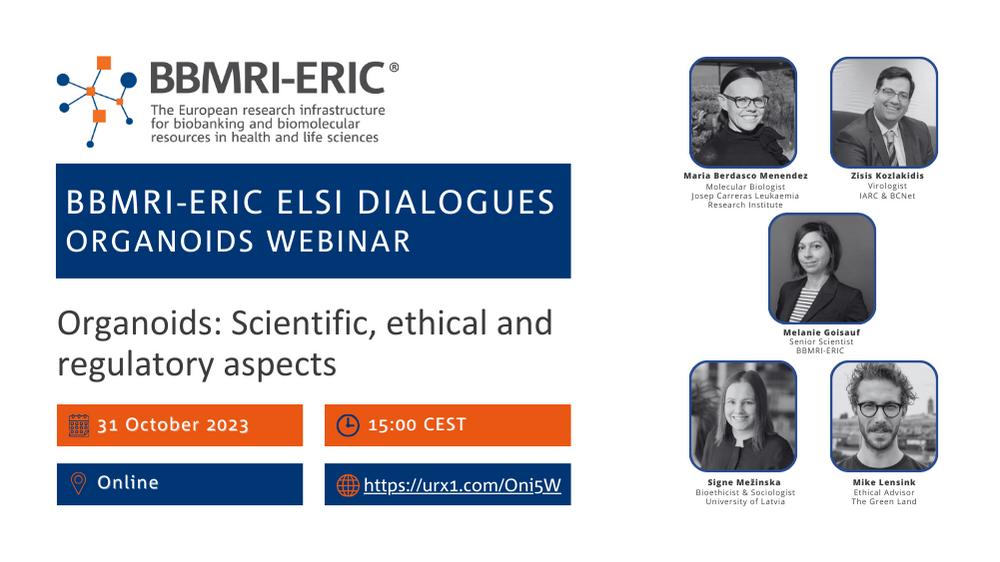
This episode of ELSI Dialogues features multidisciplinary experts discussing ethical, regulatory, and scientific aspects of organoid technology. Following a brief introduction in organoid research, a special focus is placed on biobanking from the patient perspective.
The panellists discuss trust, trustworthiness, therapeutic misconception, and the need for regulation. They also challenge definitions and the consequences of terminology such as ‘donation’ and ‘mini-organ’.
This is a collaborative effort between the ELSI Services & Research Department and the Stakeholder Forum Patient Pillar of BBMRI-ERIC. This webinar is presented by Melanie Goisauf with contributions from Zisis Kozlakidis, María Berdasco Menéndez, Signe Mežinska, and Mike Lensink.
Course Content
ELSI Dialogues: Organoids – Scientific, ethical and regulatory aspects
-
Video
39:38