
The Ethics of AI Lab spearheads research, brings experts together and provides knowledge with focus on ethical, societal and legal issues related to AI’s use in biobanking and biomedical research.
Overview #
Artificial Intelligence (AI) is one of the most significant and exciting developments of the present. It is also seen as a promising innovation in the medical field. The application of medical AI opens complex questions concerning, for instance, informed consent, biases, trustworthiness, responsibility, and liability, as well as risks associated with data privacy and protection.
Ethics of AI considers the ethical and societal implications of AI use and the potentially far-reaching consequences of AI in society – and in the field of medicine.
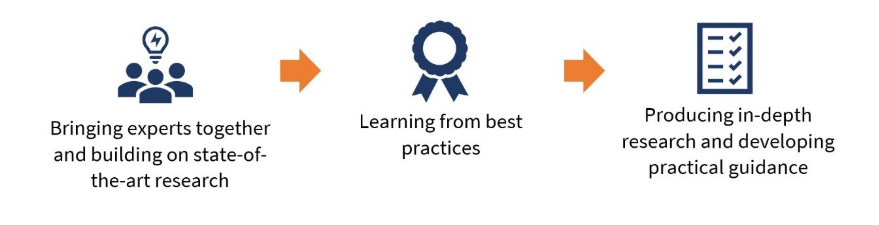
The mission of the Ethics of AI Lab in BBMRI is to provide reliable, feasible and practical knowledge on ethical and social/societal matters of AI related to biobanking and biomedical research for the immediate benefit of the community. In bringing together experts, building on state-of-the-art research and learning from best practices, the Lab produces in-depth research and develops practical guidance.
Ethics of AI Lab uses reliable research to develop practical knowledge in
BBMRI-ERIC resources #
Webinars #
- Ethics of AI in imaging: Ethical and societal implications AI applications in medicine are hoped to improve healthcare and advance health equity. While the technology carries the potential to improve health services, the ethical and societal implications need to be carefully considered to avoid harmful consequences for individuals and groups, especially for the most vulnerable. Cano Abadía and Goisauf problematise approaches such as ‘trustworthy AI’ and ‘explainable AI’ that shape the ethics discourse on AI. This webinar gives an overview of the types of ethical issues that are raised by AI in biomedical research, offering a comprehensive and systematic review of existing literature. The webinar concludes with a reflection on the topics identified that shape the understanding of ‘Ethics of AI’ and the gaps in the discourse.
- Artificial Intelligence in South-Eastern Asia – the example of the Indonesian National Artificial Intelligence Strategy on ethics and policy This BBMRI-ERIC ELSI Dialogues webinar explores the growing use of AI in healthcare across South-East Asia through the case study of Indonesia’s National Artificial Intelligence Strategy. The session examines the ethical and legal principles underpinning Indonesia’s AI governance framework, highlighting the role of the national philosophy Pancasila in promoting human-centred, trustworthy AI. It also compares the Indonesian approach with the European Union’s AI governance framework, providing valuable insights into different regulatory models and the shared challenges of ensuring responsible AI development in healthcare and biomedical research.
- Navigating the future – Legal and IT challenges, risks and opportunities of AI in biobanking This BBMRI-ERIC ELSI Dialogues webinar examines the opportunities and challenges associated with integrating artificial intelligence into biobanking. Experts discuss how AI can improve biobank management, data analysis, diagnostics, and precision medicine while addressing the legal and ethical implications arising from the use of AI with sensitive health and genomic data. The webinar focuses on the impact of the GDPR and the EU AI Act, legal responsibilities related to AI-assisted decision-making, algorithmic bias, transparency, explainability, cybersecurity, and the importance of interdisciplinary governance to ensure trustworthy AI in biobanking. Practical examples illustrate how technical innovation and regulatory compliance can be balanced to support responsible biomedical research.
Publications #
The following list refers to scientific papers, statements, guidance, etc. drafted by members of BBMRI-ERIC ELSI Team:
- Akyüz K, Cano Abadía M, Goisauf M, Mayrhofer MT.. Unlocking the potential of big data and AI in medicine: insights from biobanking. Front Med (Lausanne). 2024. https://doi.org/10.3389/fmed.2024.1336588
- Fritzsche MC, Akyüz K, Cano Abadía M, McLennan S, Marttinen P, Mayrhofer MT, Buyx AM.. Ethical layering in AI-driven polygenic risk scores-New complexities, new challenges. Front Genet. 2023. https://doi.org/10.3389/fgene.2023.1098439
- Goisauf M, Cano Abadía M.. Ethics of AI in Radiology: A Review of Ethical and Societal Implications. Front Big Data. 2022. https://doi.org/10.3389/fdata.2022.850383
- Muller H, Mayrhofer MT, Van Veen EB, Holzinger A, The Ten Commandments of Ethical Medical AI. Computer, vol. 54, no. 07, pp. 119-123, July 2021, https://ieeexplore.ieee.org/document/9473208/
- Cano Abadía M, Goisauf M. Beyond the algorithm: embedding ethics for trustworthy AI in radiology and oncology. Front Digit Health. 2026. https://doi.org/10.3389/fdgth.2026.1756256
- Goisauf M, Cano Abadía M, Akyüz K, Bobowicz M, Buyx A, Colussi I, Fritzsche MC, Lekadir K, Marttinen P, Mayrhofer MT, Meszaros J. Trust, Trustworthiness, and the Future of Medical AI: Outcomes of an Interdisciplinary Expert Workshop. J Med Internet Res. 2025. https://doi.org/10.2196/71236
- Lekadir K, Frangi AF, Porras AR, Glocker B, Cintas C, Langlotz CP, Weicken E, Asselbergs FW, Prior F, Collins GS, Kaissis G, Tsakou G, Buvat I, Kalpathy-Cramer J, Mongan J, Schnabel JA, Kushibar K, Riklund K, Marias K, Amugongo LM, Fromont LA, Maier-Hein L, Cerdá-Alberich L, Martí-Bonmatí L, Cardoso MJ, Bobowicz M, Shabani M, Tsiknakis M, Zuluaga MA, Fritzsche MC, Camacho M, Linguraru MG, Wenzel M, De Bruijne M, Tolsgaard MG, Goisauf M, Cano Abadía M, Papanikolaou N, Lazrak N, Pujol O, Osuala R, Napel S, Colantonio S, Joshi S, Klein S, Aussó S, Rogers WA, Salahuddin Z, Starmans MPA; FUTURE-AI Consortium.. FUTURE-AI: international consensus guideline for trustworthy and deployable artificial intelligence in healthcare. BMJ. 2025. https://doi.org/10.1136/bmj-2024-081554
- Mayrhofer, M.T., Slokenberga, S., & Mežinska, S. (Eds.). (2025). Artificial Intelligence in Biobanking: Ethical, Legal and Societal Challenges (1st ed.). Routledge. https://doi.org/10.4324/9781032634487
- Colussi I. A possible risk governance approach for AI in health research and biobanking. In: Mayrhofer MT, Slokenberga S, Mežinska S, editors. Artificial Intelligence in Biobanking: Ethical, Legal and Societal Challenges. 1st ed. Routledge; 2025. doi:10.4324/9781032634487
- Akyüz K, Cano Abadía M, Goisauf M. Artificial intelligence, sex, and gender: Hypes, hopes, and potential risks in biobanking. In: Mayrhofer MT, Slokenberga S, Mežinska S, editors. Artificial Intelligence in Biobanking: Ethical, Legal and Societal Challenges. 1st ed. Routledge; 2025. doi:10.4324/9781032634487
- Mayrhofer MT. Powerful AI: between accountability and potentiality. In: Mayrhofer MT, Slokenberga S, Mežinska S, editors. Artificial Intelligence in Biobanking: Ethical, Legal and Societal Challenges. 1st ed. London: Routledge; 2025. doi:10.4324/9781032634487
- Mayrhofer MT, Slokenberga S, Mežinska S. Learnings from unboxing the black box. In: Mayrhofer MT, Slokenberga S, Mežinska S, editors. Artificial Intelligence in Biobanking: Ethical, Legal and Societal Challenges. 1st ed. London: Routledge; 2025. doi:10.4324/9781032634487
- Bak M, Madai VI, Fritzsche MC, Mayrhofer MT, McLennan S. You Can’t Have AI Both Ways: Balancing Health Data Privacy and Access Fairly. Front Genet. 2022 Jun 13;13:929453. doi: 10.3389/fgene.2022.929453. PMID: 35769991; PMCID: PMC9234328.
EU projects #
- INTERVENE: INTERVENE seeks to advance AI-facilitated analyses of complex medical data to develop genetic risk scores, which summarize the estimated effect of an individual’s genetic makeup on the risk of developing a particular disease.
- EuCanImage: EuCanImage will build a highly secure, federated and large-scale cancer imaging platform, with capabilities that will greatly enhance the potential of Artificial Intelligence in oncology.
- BIGPICTURE: The project aims to create a repository of digital copies of around 3 million slides covering a range of disease areas. This repository will then be used to develop artificial intelligence tools that could aid in the analysis of slides.
Acknowledgements #
The entry was co-funded by EuCanImage, INTERVENE, and BIG PICTURE, projects that have received funding from the European Union’s Horizon 2020 research and innovation programme under, respectively, grant agreement No 952103, No 101016775, No 945358. BIG PICTURE is a European public-private partnership funded by the Innovative Medicines Initiative 2 (IMI2) Joint Undertaking. This Joint Undertaking receives support from the European Union’s Horizon 2020 research and innovation program and EFPIA.
Contacts #
- Dr. Melanie Goisauf, Senior Scientist – Ethics of AI Lab Lead , melanie.goisauf@bbmri-eric.eu


